Meta Ads New Updates April 2026: Everything Digital Marketers Need to Know
The digital advertising world rarely stands still, but April 2026 has delivered a wave of changes that demand every marketer’s immediate attention. The Meta Ads new updates rolling out this month are not incremental tweaks – they represent a fundamental shift in how the platform operates, how budgets are spent, and how campaigns are built and measured. Whether you are a solo advertiser or part of a large agency team, understanding these changes is critical to staying competitive in social media marketing today.
The Big Picture: AI Is Now the Engine, Not the Feature
If there is one overarching theme across all of the Meta Ads new updates in April 2026, it is this: artificial intelligence has moved from a helpful add-on to the core operating layer of the entire ad platform. Meta is no longer building tools for marketers to push buttons manually – it is building a machine that increasingly acts as the marketer itself.
This is driven by the continued rollout of Meta’s Andromeda algorithm, powered by NVIDIA’s GH200 chip. Andromeda is reportedly 100 times faster at matching users to ads and can handle up to 10,000 times more ad variants simultaneously compared to Meta’s previous system. In practical terms, this means creative diversity and campaign simplicity are no longer optional best practices – they are survival requirements. Brands that feed the algorithm a wide variety of quality creatives will win; those clinging to manually curated, micro-segmented campaigns will lose ground fast.
1. Meta Pixel Gets an AI-Powered Makeover
One of the most significant April 2026 announcements came from Meta’s advertising infrastructure team. The Meta Pixel has been upgraded with AI-assisted data collection, allowing the system to automatically pull in additional page and product information, including product names, availability, and business details, without requiring ongoing developer input.
Previously, this level of data enrichment required a dedicated technical team, giving larger advertisers a measurable performance edge. The new AI-powered update levels the playing field. Small businesses can now access the same quality of event data that enterprise brands have relied on, with far less technical overhead.
Alongside this, Meta introduced a one-click setup option for the Conversions API, requiring no technical expertise and no ongoing maintenance costs. Meta’s own internal data suggests that advertisers using the Conversions API for web events saw an average 17.8% lower cost per result compared to those who did not use it. This is a meaningful efficiency gain that every advertiser should pursue immediately.
Existing Meta Pixel users will receive a 30-day notification window before the AI enhancement is enabled. Advertisers can review, adjust, or opt out through Events Manager at any time.
2. Threads Ads Go Global
April 2026 marks a major milestone for Threads, Meta’s text-based social platform that now boasts over 400 million monthly active users. App Ads are now available globally on Threads through the Marketing API, allowing advertisers to run app install and app event optimization campaigns without needing to create new ad creatives.
For brands already active in social media marketing, this is an important expansion. Thread placements often carry lower competition and higher engagement rates compared to saturated Facebook and Instagram feeds. Marketers willing to test the platform early will have an advantage before the space becomes crowded.
A new reply moderation tool has also been introduced for Threads ads, giving advertisers the ability to view, hide, and respond to top-level replies on their ad posts. This gives brands more control over their public ad environment and opens the door to more conversational, community-increasing ad strategies.
3. Format Simplification: Goodbye Flexible and Collection, Hello Format Display Options
Meta has replaced its legacy Flexible and Collection ad formats with a consolidated new system called Format Display Options. This change is part of Meta’s broader campaign to reduce complexity inside Ads Manager and push advertisers toward more automated, AI-optimized creative delivery.
The new Format Display Options allow Meta’s system to automatically select and display the most effective creative combination for each user and placement, a logical extension of the Andromeda algorithm’s capability to process thousands of ad variants simultaneously. For advertisers, this means fewer manual decisions at the format level and more reliance on supplying high-quality, diverse creative assets.
4. Instant Forms Can Now Be Edited After Launch
A long-requested feature has finally arrived: Instant Forms in Meta Ads Manager can now be edited after a campaign goes live. Previously, any change to a lead generation form required pausing the campaign and creating an entirely new form, which disrupted delivery and reset optimization data.
This update brings meaningful flexibility to lead generation campaigns in social media marketing. Teams can now fix errors, update offers, and refine form questions without losing momentum. It is a small-sounding change with a large practical impact on day-to-day campaign management.
5. Automotive Advertisers: DMA Targeting Is Ending
Automotive advertisers need to act before June 22, 2026. Meta is replacing Nielsen’s Designated Market Areas (DMAs) with Comscore Markets for vehicle offer targeting. Notifications began rolling out on April 20, 2026, and any campaigns still using Nielsen DMA targeting will be automatically paused when the transition completes.
Advertisers running automotive catalog campaigns must update their vehicle offer feeds with Comscore Market IDs using the mapping table provided by Meta. Updates can be made through Catalog Manager or via the API.
6. Manus AI Integration Across Meta’s Business Tools
Source: https://streamlinefeed.co.ke/news/the-2-billion-trap-china-probes-metas-deal-for-ai-unicorn-manus
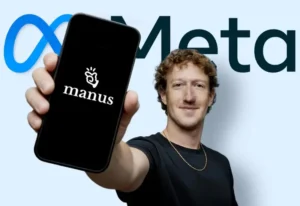
Meta is integrating Manus AI directly into Ads Manager, creator tools, Instagram, and WhatsApp Business. This brings a new layer of AI-driven task automation and data analysis into workflows that marketers already use every day. The integration is designed to help advertisers move faster, surface insights more efficiently, and reduce the cognitive load of campaign management.
For anyone active in social media marketing across Meta’s ecosystem, the Manus AI integration signals that AI assistance will increasingly be embedded at every stage — from creative ideation to performance analysis.
7. The Road Ahead: Meta’s Generative Ad Model (GEM)
Looking beyond April, Meta is actively developing what it calls the Generative Ad Model (GEM). When fully rolled out, GEM will allow advertisers to provide nothing more than a product URL, a budget, and a brief prompt, and the AI will generate the entire campaign from scratch, including images, copy, headlines, and animations.
The implications for social media marketing are profound. The competitive advantage will shift away from manual campaign management and toward the quality of a brand’s offer, landing page, and customer journey. Marketers who invest now in strong creative assets, clear messaging, and solid conversion infrastructure will be best positioned when GEM becomes widely available.
What Digital Marketers Should Do Right Now
Given the scope of these Meta Ads new updates, here is a practical action checklist:
- Enable the Conversions API if you have not already. The one-click setup removes every technical barrier.
- Review your Meta Pixel settings in Events Manager before the AI enhancement auto-enables.
- Test Threads placements while competition is still low.
- Consolidate your campaign structure – fewer ad sets with broader audiences give Andromeda more room to optimize.
- Update automotive feeds to Comscore Market IDs before June 22.
- Diversify your creative library. Andromeda rewards variety, not repetition.
- Edit and optimize Instant Forms for your active lead generation campaigns.
Conclusion:
The April 2026 updates make one thing crystal clear: Meta Ads is no longer a platform you simply log into and manage – it is an intelligent system you must learn to collaborate with. From the AI-powered Meta Pixel Makeover to Threads Ads going global, from editable Instant Forms to the looming arrival of the Generative Ad Model, every update this month points in the same direction: automation, simplicity, and creative quality are now the pillars of paid advertising success on Meta.
For businesses and brands navigating these rapid changes, having the right guidance matters more than ever. Partnering with an experienced Freelance Digital Marketing Strategist in Kannur can make the difference between campaigns that drain budgets and campaigns that consistently deliver results. A skilled strategist understands not just the technical mechanics of Meta Ads new updates, but also how to translate those changes into smart, localised strategies that connect with real audiences.
Whether you are a small business owner in North Kerala trying to generate leads, an e-commerce brand looking to scale, or a startup testing your first paid social campaign, working with a Freelance Digital Marketing Strategist in Kannur gives you the hands-on expertise and platform knowledge needed to stay ahead without the overhead of a full agency.
The platforms will keep evolving. The algorithms will keep changing. But with the right strategy and the right partner, your business does not just keep up, it grows.
Written by: MUHAMMED RAZI